By Iddo Tavory, December 19th, 2010
Today we post the controversial Rabbinical open letter in Israel prohibiting as a matter of religious obligation the renting or selling of property to non-Jews, translated and with reflections on its meaning by Iddo Tavory. It has caused great controversy in Israel and beyond (link and link), including at DC as it challenges the meaning of Israel as a democratic and Jewish state. -Jeff
The Translation:
In response to the query of many, we respond that is forbidden, by Torah-law, to sell a house or a field in the land of Israel to a non-Jew. As Maimonedes wrote: “as it is written (Deuteronomy 7:2) ‘thou shalt make no covenant with them, nor show mercy unto them’ which means you shall give them no title to land. For if you do not give them title, their staying shall be temporary.” (laws: 77; 10, 4). And on that topic, the Torah warned in numerous places, that it causes evil and make the many sin in intermarriage, as it is said “For they will turn your sons away from following Me” (Deuteronomy 7:4), which is blasphemy (Maimonedes, 12:6). And it also causes the many to otherwise transgress, as the Torah has warned: “They shall not live in your land, because they will make you sin against Me” (Exodus 23: 33). And the sin of he who sells, and he who profits from it, is upon the heads of those who sell, God shall have mercy.
And evil upon evil, that he who sells or lets them rent an apartment in an area in which Jews are living, causes great damage to his neighbors, and for them it is said “and they shall trouble you in the land where you dwell.” (Numbers 33: 55). For their way of life is different from that of Jews, and some of them harass us and make our life hard, to the point of danger to our very lives, as has become well known on several occasions. And even outside of Israel they have forbidden to sell them in Jewish neighborhoods for this very reason, and all the more so in the land of Israel, as it is elucidated in the [Jewish book of law] Shulhan . . .
Read more: The Israeli Rabbis’ Letter: a Translation
By Jeffrey C. Goldfarb, October 24th, 2010 
As we are critical of the paranoid style of politics, as I am concerned that the worst elements of the American populism and demagoguery are being mainstreamed in our political life, I recall that this is a reaction to a major trend that many of us have experienced directly and meaningfully, including me.
 Even as we are bombarded by crazy assertions that the American President is not an American citizen and that he is a secret Muslim, we need to recall that this sort of paranoia is reactionary. It’s a response to an American triumph, the American people elected an African American, Barack Hussein Obama, to be President of the United States. Even as his popularity waxes and wanes, he is our President. We elected him by not succumbing to fears and hatreds, revealing our better selves. This triumph goes beyond our evaluation of President Obama’s job performance. It stands as a challenge to those who work to revive a politics of fear of the different. It challenges those who speak about “taking their country back.” Even as we are bombarded by crazy assertions that the American President is not an American citizen and that he is a secret Muslim, we need to recall that this sort of paranoia is reactionary. It’s a response to an American triumph, the American people elected an African American, Barack Hussein Obama, to be President of the United States. Even as his popularity waxes and wanes, he is our President. We elected him by not succumbing to fears and hatreds, revealing our better selves. This triumph goes beyond our evaluation of President Obama’s job performance. It stands as a challenge to those who work to revive a politics of fear of the different. It challenges those who speak about “taking their country back.”
I came to know the dimensions of the triumph, along with my fellow citizens, on the night of the Iowa Caucuses and the day after. Obama won in an overwhelmingly white state. The previously excluded was chosen, and the seriousness of Obama’s candidacy was clearly revealed.
The next day when I went for a swim at the Theodore Young Community Center (link), I saw how my African American friends, the whole gang, but especially the center of the social circle, Beverly McCoy,  finally came to believe that I wasn’t crazy in thinking that Obama had a chance. In our community center, we started thinking differently about our country. I stopped being the naïve Jewish Professor. Perhaps, I was instead a realist. Together, we realized that we may live in a better country than we had imagined the day before. I think that we started looking at each other differently. We more openly spoke about race, about our fears and hopes, about being black and white, Jewish and Christian, . . . finally came to believe that I wasn’t crazy in thinking that Obama had a chance. In our community center, we started thinking differently about our country. I stopped being the naïve Jewish Professor. Perhaps, I was instead a realist. Together, we realized that we may live in a better country than we had imagined the day before. I think that we started looking at each other differently. We more openly spoke about race, about our fears and hopes, about being black and white, Jewish and Christian, . . .
Read more: Against Paranoia
By Jeffrey C. Goldfarb, August 23rd, 2010
The confirmations hearings of Barack Obama’s two Supreme Court Justice nominees were more about politics than about justice, and the politics revealed were not attractive:
Thoughts on Sotomayor:
A significant portion of the population in the United States is not comfortable with an African American President. This very seriously has shaped official public debate, clearly in the confirmation hearings of Justice Sonia Sotomayor. The New York Times reported about Sotomayor’s leading critic in the Senate before the confirmation hearings: Senator Jeff Sessions of Alabama, the highest-ranking Republican on the Judiciary Committee, said the fairness issue was “the core of the American system” and was central to Republicans’ qualms.

“Every judge must be committed every day to not let their personal politics, their ethnic background, their biases, sympathies influence the nature of their decision-making process,” Mr. Sessions said Sunday on the CBS program “Face the Nation.”
Mr. Sessions pointed to what he called Judge Sotomayor’s advocacy positions and to her widely publicized remark that a “wise Latina woman” would make better judicial decisions than a white man.
“I am really flabbergasted by the depth and consistency of her philosophical critique of the ideal of impartial justice,” Mr. Sessions said. “I think that’s a real expression of hers.” (link)
The underlying theme of the Republican questioning of Sotomayor was revealed in Sessions’ statement. There was the proposition that because she thought that the special insights and experiences of people with different identities could improve the quality of justice, she somehow was less committed to the ideals of impartial justice. Over and over, the Republican Senators returned to one quotation from her public speeches, “I would hope that a wise Latina woman with the richness of her experiences would more often than not reach a better conclusion than a white male who hasn’t lived that life.” (link)
The principle reason given for opposing Sotomayor was that she didn’t believe in equal justice. Could it be that this was serious? What she meant is really not complicated. Bringing in new perspectives improves the pursuit of justice. People who have been excluded add something important, and they can be proud of it. Of course, . . .
Read more: A Tale of Two Justices: Sotomayor
By Jeffrey C. Goldfarb, August 23rd, 2010
Part 3: The Gates-gate affair, as a media race event, became explicitly political when Obama weighed in. His comment on the Gates arrest came at the end of a long and detailed news conference on health care reform. Asked what he thought about the arrest, The New York Times reported that: “Mr. Obama took it [the question] head on, noting that “I may be a little biased” because he is friends with Mr. Gates but condemning the police in Cambridge, Mass.
He said: “I think it’s fair to say, No. 1, any of us would be pretty angry. No. 2, the Cambridge police acted stupidly in arresting somebody when there was already proof that they were in their own home. And No. 3, what I think we know separate and apart from this incident is there is a long history in this country of African-Americans and Latinos being stopped by police disproportionately. That’s just a fact.”
Obama admitted that he did not know all the facts in the case and he explicitly did not accuse anyone of racial bias, but the implication was there for all to comment on, and they did.
The debate intensified. It started with the arrest and was a continuation of an ongoing theme: dealing with the problems of race in America, including the very different perceptions of the problem across the population. Those with clear positions presented them forcefully, and they were joined by the beltway pundits who commented on the practical implications of the response, without much reference to the normative issues involved. (link) Obama backtracked recognizing that he had inflamed the situation by calling the Cambridge police actions stupid, and he invited Crowley and Gates for a beer at the White House to diffuse the situation, which it did.

Another moment in the continuing struggle to talk about the problems of race and American democracy passed. But this one was different, having to do with the fundamental issue of political culture: the relationship between culture and power. Things were turned around, a revolution of sorts was apparent. This was the first time that such an issue . . .
Read more: The Obama Effect
By Jeffrey C. Goldfarb, August 23rd, 2010
The first two parts of “Gates-gate,” a socio-political drama in three parts, suggest the validity of the old French saying, “The more things change, the more they stay the same.”
Part 1: a local affair, in Cambridge, Massachusetts: Henry Louis Gates Jr. returned from a trip to China, ironically working on a television documentary on the heterogeneous racial, ethnic and national genealogy of Americans. When he and his driver were trying to open his front door, finding that it was jammed, a neighbor thinking that they might be burglars called the police. The police investigation led to the arrest of Gates in his own home, with Gates asserting racial profiling, with Sgt. James Crowley, the arresting officer, charging Gates with disorderly conduct. The charges were subsequently dropped.

The characters in the affair are noteworthy. Gates is a distinguished professor at Harvard, a renown scholar and public intellectual. As a student of African American culture, he is careful and sober, not a flaming radical. Crowley, ironically, is a police academy expert on racial profiling, teaching a course on the subject at the Lowell Police Academy. And in many ways the two are on the same side of the cultural wars. Both Gates and Crowley have cooperated with the Simon Wiesenthal Center, Crowley having participated in a 3- day workshop on Racial Profiling at the Simon Wiesenthal Center’s Museum of Tolerance in Los Angeles in 2007, Gates delivering the Center’s Third Annual “State of Antisemitism” Lecture in New York in 1994. These were odd antagonists in what turned out to be a major national affair.
Part 2: the local becomes national. The event was first covered by The Harvard Crimson, but given Gates’ prominence, and the irony that he was apparently arrested for breaking into his own home, it became a national story, covered by the national media. As such affairs go, it followed the conventional black and white script. There were those who clearly saw the ugly face of racism pure and simple, and there were those who sided with the cop and stressed the importance of maintaining and respecting law and order. The usual suspects played . . .
Read more: The more things change, the more the stay the same
By Jeffrey C. Goldfarb, August 23rd, 2010
The persistence and changes of racism in American political culture are nicely revealed in the periodic explosions of racial controversy. From decisions about affirmative action, to the killing and brutalization of innocents, from Emmett Till to Abner Louima, to the prosecution of a black media celebrity charged and convicted of killing his white wife, i.e. the strange case of O.J. Simpson, the character of racism is clearly revealed.
These events may not be at the core of the problem of racism. That is manifested more in the daily struggles and interactions of ordinary people, beyond the public eye, as they get on with their lives. But the events, “media race events,” permit the symbolic enactment of American moral codes about race.

Blacks and whites perceived the OJ trial and acquittal differently. In and of itself this would appear to be a trivial matter. It took on great significance because it revealed how separately and differently blacks and whites live and perceive themselves and each other in America. Distinctions, differences and commonalities about race were revealed. With an African American President, such a case, which inevitably appears periodically in American life, has taken on a new dimension. The head of state, the central symbol of authority in the society, is now black, and this necessarily has meaning. The first case in point in the course of the Obama Presidency is “Gates-gate,” a socio-political drama in three parts. The case suggests both how racisms persists and has not much changed even with the election of a African American President, but also how the election has changed everything.
By Jeffrey C. Goldfarb, August 23rd, 2010
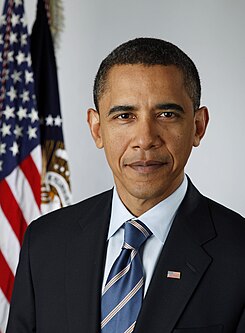
As Obama was elected to the United States Senate and with talk about his Presidential prospects going beyond our family circle, my wife, Naomi, and I became early and enthusiastic supporters. He made us believe that there was an alternative, another, better America which he could represent and lead, and in which we wanted to be active. We made early modest financial contributions to his campaign, and in turn the campaign identified us, and recruited Naomi in December of 2007to go to the city of White Plains, New York, near our home, to collect signatures to put Obama’s name on the ballot for New York Democratic Primary. She spent an afternoon and collected around 20 signatures. It was hard work. A cold afternoon, people were not yet focused on the election, and those who were did not think that Obama had a chance, nor was he their choice.
Remember Hillary Clinton was our popular Senator. Naomi particularly remembers one African American man who practically laughed in her face that she thought Obama had any chance. Although she did good hard work, I thought I could more easily get as good results at a nearby community center where I swim, and I did.
Our county, Westchester, is a residentially segregated. Renown for wealth, it is actually quite diverse (40% of the population is non white), with significant immigrant neighborhoods and concentrated African American sections, one of which is served by the Theodore Young Community Center. Most of the staff and the patrons of the center are African American, but many other people, Latino, Asian and white, also use the Center, for many different activities. For years, I went to swim. I didn’t socialize. I would put in my mile or two, two or three times a week, without making friends and barely having acquaintances. I worked out and went home, that is, until I decided to try to match Naomi’s collection of signatures, doing so in less than an hour before and after a mid day swim.
In a way, it wasn’t as easy as I had expected. Many of the staff . . .
Read more: Talking about Race in a New World
|
Blogroll
On the Left
On the Right
|

